Wonderkeeper Stories
Two examples of the Wonderkeeper stories I can write for you
These are fictional stories- this allows me to demonstrate my approach without compromising the privacy of real donors or real organizations.
What isn’t fiction: the craft, the psychology, and the structure behind every word.

Sample #1
Blaize Thompkins and the Canaveral National Seashore
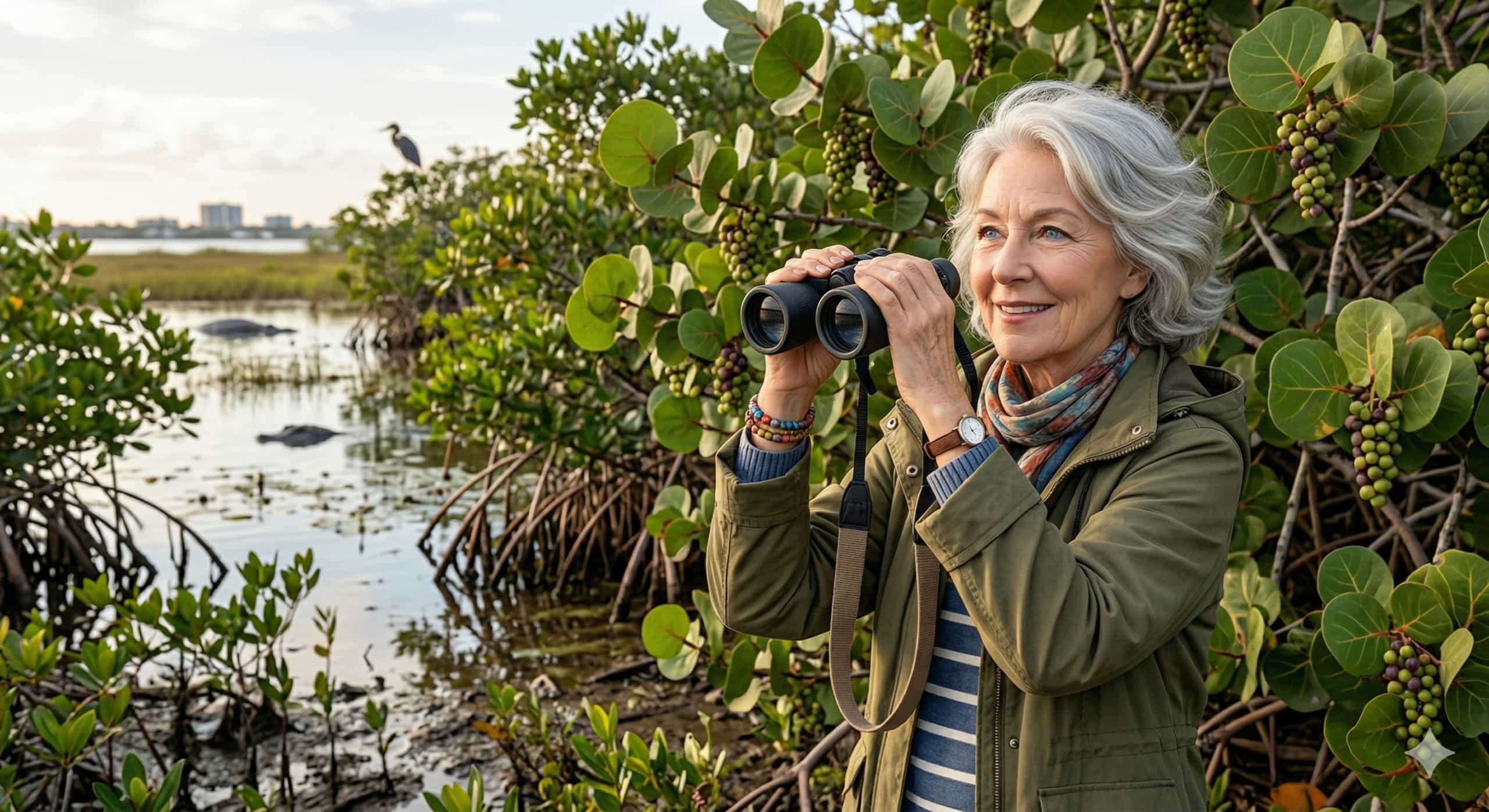
The light came low across the water in the early morning — just enough to catch the edges of wings before the birds settled into the reeds.
“Conk-la-ree.” The greeting of a red-winged blackbird. A blue heron squawked. Cicadas buzzed in the trees. An alligator left a wake as it moved silently across the water. Blaize Thompkins learned to be still in those moments.
Surrounded by sea grapes, maritime hammock vegetation, and mangroves, this place of serene beauty.
On her first morning birding adventures – as a young girl – her father would stand a few steps behind her, whispering names she would come to know by heart — egret, heron, white ibis — until a marsh or wooded area began to feel like something she could read.
Every time they did this together, she made believe they were stepping into a new world. A world of wonder and surprises.
What began as something she did with her father gradually became something she carried on her own. Even as her life moved in other directions — education, career, responsibility — the habit of noticing never left her.
Blaize saved her allowance to purchase a professional camera setup. She taught herself wildlife photography. Her images began to appear in conservation publications.
Eventually, she published her own photo book. She teaches others the secrets of nature photography these days.
There was one place she returned to more than any other: The Canaveral National Seashore corridor — miles of undeveloped Atlantic coastline, tidal lagoon, and scrub flatwood, quietly stewarded over the years against the slow pressure of development on every side. She was surprised that it wasn’t like any other coastal area she knew. It didn’t feel like any other stretch of Florida coast.
“I remember thinking — this is what nature is supposed to look like,” she says.
There were other visitors to notice: manatees and dolphins on the river side. And leatherback, loggerhead, and green sea turtles would lay their eggs on the beach under night skies.
One day, a “birding” friend of hers invited Blaize to a Southeastern Coastal Wetlands gathering in Orlando.
Something about the organization’s work felt familiar to her that night. Not the facts or the figures, but the underlying instinct — that these places deserved to be protected not because they were useful, but because they were irreplaceable. She came back. First as a project volunteer, then as a member of the events committee.
“I’m not leaving them money. I’m leaving them time, time to preserve coastline habitats for generations to come.”
She began to think about time differently — not in terms of years, but in terms of continuity. What remains. What disappears. And what is carried forward.
“At some point you stop thinking about your life in years and start thinking about it in what might continue afterwards.”
The idea did not arrive all at once. It emerged slowly, almost the way the birds did — something you begin to notice only after you’ve been still long enough.She found herself returning to a question she couldn’t quite set aside. “I kept thinking — this place gave me something. A way of seeing, really. And I thought, what do I owe it?”
Not as an obligation. As a continuation.
Through a legacy commitment to Southeastern Coastal Wetlands, she arranged for her support to extend beyond her lifetime — helping to protect the coastal corridor she had returned to for so many years.
For Blaize, it was about knowing that long after she was gone, the light would still move across the water in the early morning… and someone else might be standing there, just beginning to see.
People who love these places the way Blaize does often find that a legacy gift is simply the most natural extension of a life already devoted to them.
Blaize says, “I worked with Southeastern Coastal Wetlands for years. I came to love and trust this organization and its stewardship of wildlife habitats.”
(Your CTA goes here)
Sample #2:
Michael Alvarez and the Indian River Lagoon
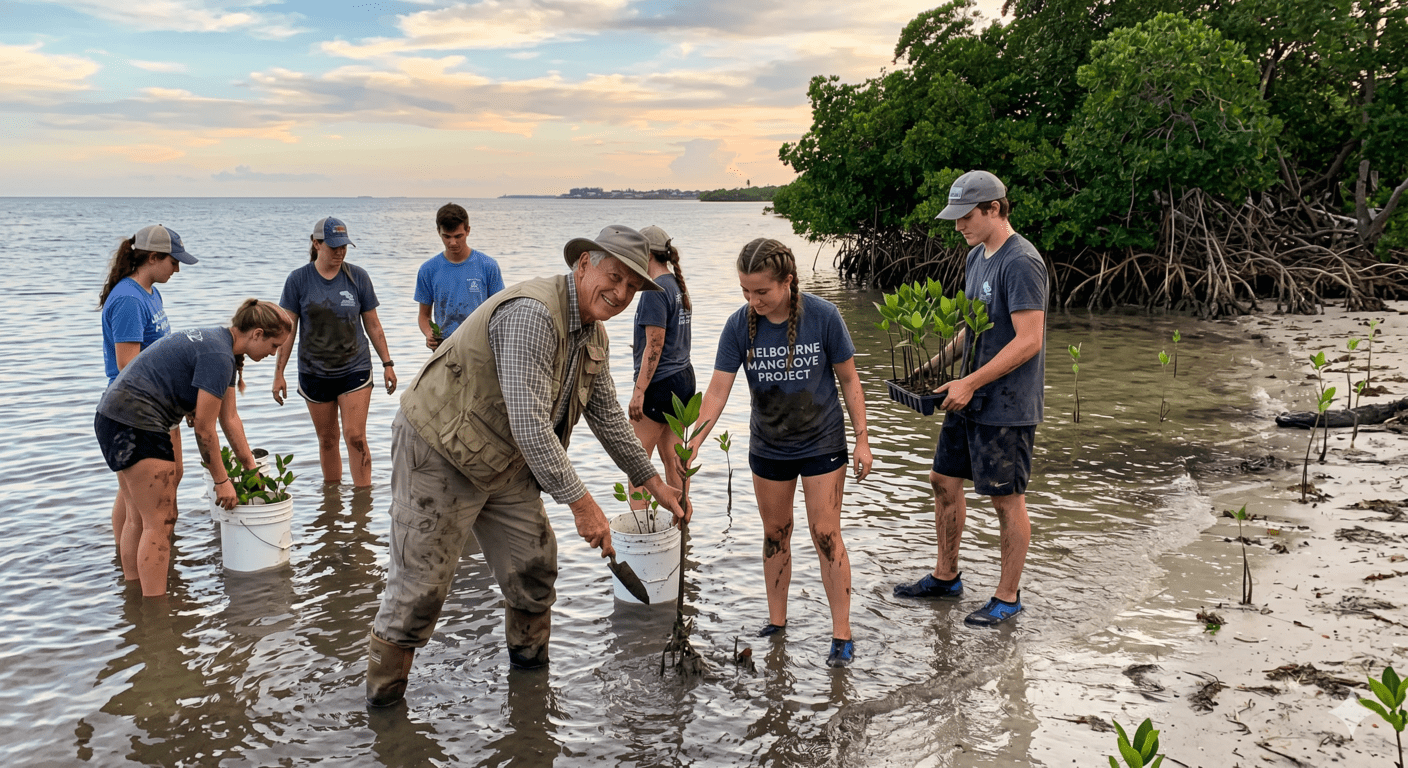
Dr. Michael Alvarez waded into the waters of the Indian River as the sun rose in the east. Greeted by the chirping of a mother osprey – and an occasional whiny from an eastern screech owl -hidden somewhere inside the tangle of the nearby mangroves, he smiled.
Fifty yards offshore, a pod of dolphins corralled fish for their breakfast, their bodies breaking the surface silently.
Several pelicans glided inches above the water, while others dropped from the sky like lawn darts, plunging, then emerging with their own breakfast.
The brackish waters smelled earthy, musky. Around his feet, between mangrove roots, that water was teeming with life.
This had become his home.
Not the pretty brick house in Palm Bay, the address his mail came to.
Dr. Alvarez retired last year as head of the Marine Biology Department at nearby Florida Tech.
He might tell you that his best teaching happened far from the classroom: Alongside student volunteers, wading through shallow estuaries, planting mangroves, or restoring fragile shoreline habitats damaged by storms and development.
“When you see young people working knee-deep in the water to bring an ecosystem back to life,” he says, “you realize conservation is really an act of hope. Optimism for the future, expressed by a little sweat and muck under the fingernails.”
“Mangroves and seagrasses do far more than act as sanctuaries for marine wildlife. They capture and store enormous amounts of carbon — what we now call “blue carbon” — slowing the impacts of climate change while helping protect fragile shorelines.”
Dr. Alvarez had served for many years on the executive board of the Indian River Comeback Foundation. He’d represented the cause before legislators in Tallahassee. He’d partnered with the Florida Fish & Wildlife Commission in public education efforts. He’d authored a book on the lagoon.
“I trust Indian River Comeback Foundation with my bequest. I know them and trust them to continue my work.”
“I’ve spent a lifetime studying these waters,” he says. “This gift is my legacy, my way of making sure the life here continues to thrive long after I’m gone. This is my way of paying my love forward.”
(Your CTA goes here)
An Invitation
Actual people, just like the imaginary Blaize Thompkins and Dr. Michael Alvarez, are helping preserve what they love for future generations to enjoy.
If the stories of your Conservation Wonderkeepers are still untold, I’d love to help.
Stories don’t just entertain us. They literally rewire our brains. They teach us empathy by letting us experience life through someone else’s eyes.